The Amalfi Coast spans 50 kilometers of vertical cliffsides, thirteen coastal towns, and one narrow highway connecting them all. Planning a trip here means deciding which towns to base yourself in, how to move between them, and when to arrive before the tour buses do. This guide covers the structural decisions that shape your visit.
Quick answer
Planning a trip to the Amalfi Coast begins with choosing your base town—Positano for scenery and dining, Amalfi for central access, or Sorrento for transport links—and booking accommodation three to six months ahead for peak season. The region is accessible year-round with no entrance fee, though individual sites and attractions charge separately. Arrive early in the day, between 06:00 and 09:00, to navigate the coastal road before midday traffic peaks.
The Amalfi Coast is not a single destination but a chain of towns clinging to limestone cliffs between Sorrento and Salerno. Thirteen comuni dot the Costiera Amalfitana, each connected by the Strada Statale 163, a two-lane road carved into rock that twists through 40 kilometers of hairpin turns. How you plan a trip to the Amalfi Coast depends on whether you prioritize coastal views, hiking access, or proximity to Naples and Pompeii. Most visitors anchor themselves in one of three towns. Positano offers postcard verticality—pastel houses stacked on cliffs, beach clubs at sea level, and boutique hotels with terrace dining. Amalfi sits at the geographic center, with ferry connections to Salerno, Positano, and Capri, plus the Duomo di Sant'Andrea and Valle delle Ferriere hiking trails inland. Sorrento lies outside the official Costiera boundary but serves as a transit hub with direct trains to Naples, Pompeii, and Herculaneum, plus hydrofoil service down the coast. Each base involves tradeoffs: Positano is photogenic but expensive and car-hostile; Amalfi balances access and atmosphere; Sorrento sacrifices coastal drama for logistical convenience. Transport planning determines your itinerary's feasibility. The SITA Sud bus network runs the length of the coast, with routes connecting Sorrento, Positano, Praiano, Amalfi, Atrani, Minori, Maiori, and Vietri sul Mare. Buses run frequently in summer but require patience—stops are often standing-room-only, and the coastal road clogs by mid-morning. Ferries operate from April through October, linking Positano, Amalfi, Salerno, and Capri; they bypass road traffic but depend on weather and sea conditions. Renting a car offers flexibility but demands confident maneuvering on narrow roads with blind corners, limited parking, and restricted traffic zones in town centers. Many travelers combine modes: bus for short hops, ferry for scenic transfers, and private drivers for early-morning or evening movement. Organizing your Amalfi Coast trip also means accounting for accommodation scarcity and price variation. Hotels in Positano and Ravello fill six months ahead for July and August; April through June and September offer better availability and lower rates without sacrificing weather. Lodging options span cliffside luxury hotels, family-run agriturismi in hillside villages like Furore and Agerola, and budget pensioni in less-touristed Maiori or Cetara. Proximity to the coastal road matters: properties perched high above the main route offer views but require steep climbs or shuttle transfers. Those at sea level grant immediate beach access but less privacy. The Costiera Amalfitana operates year-round with free regional access, though churches, villas, archaeological sites, and nature reserves charge separate admission. The Path of the Gods trail between Agerola and Positano, Villa Rufolo in Ravello, and the Emerald Grotto near Conca dei Marini each have distinct entry policies. Day-trippers from Naples and Rome flood the coast between 10:00 and 18:00; arriving before 09:00 grants access to empty piazzas, open restaurant terraces, and parking spaces in Amalfi and Atrani. Late-season visits—October through November—bring quieter streets, lower accommodation rates, and occasional rain that clears the haze for sharper clifftop views. Planning your trip to the Amalfi Coast is less about ticking landmarks and more about calibrating your base, transport rhythm, and daily timing to match the region's vertical geography and seasonal crowd patterns. The coast rewards visitors who treat it as a series of connected villages rather than a single attraction.
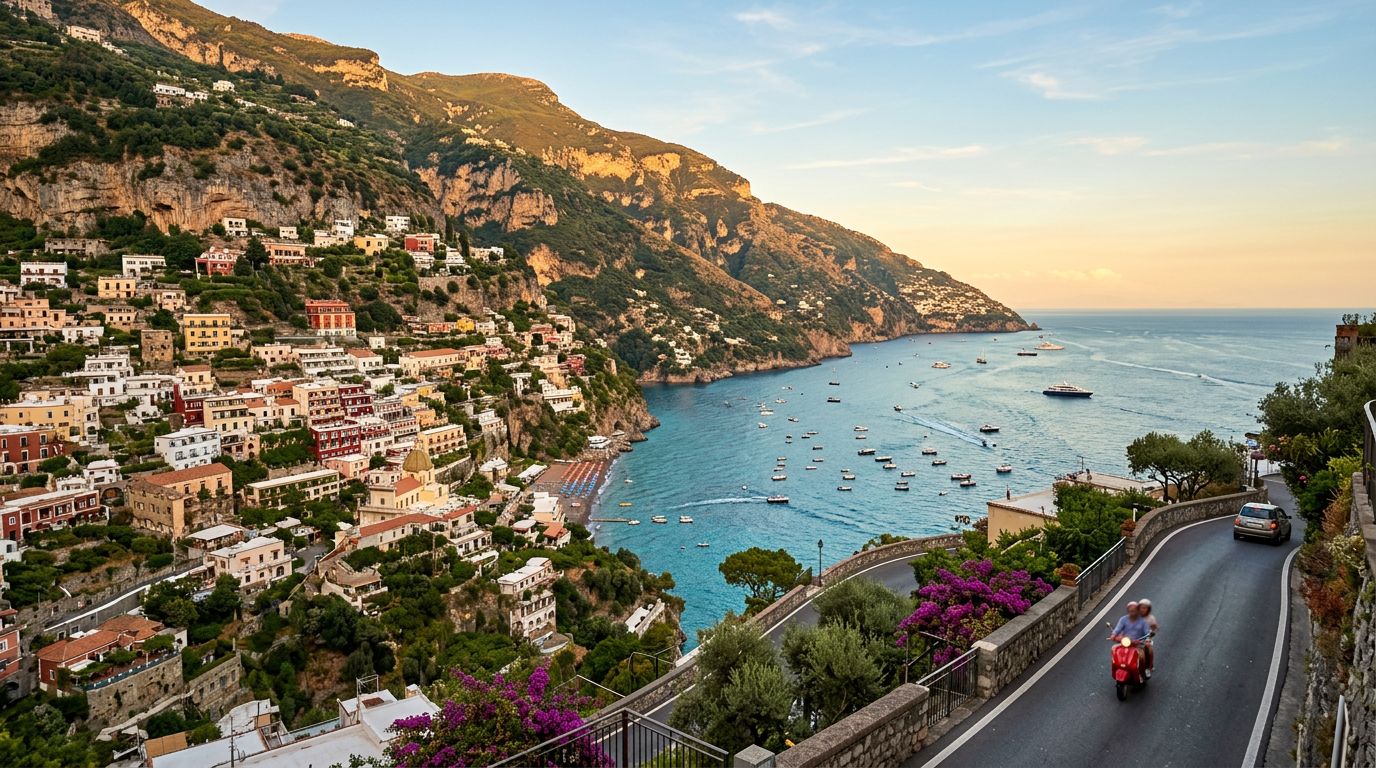
“The Amalfi Coast is not a single destination but a chain of towns clinging to limestone cliffs between Sorrento and Salerno.”
The most favorable period to visit the Amalfi Coast spans from April to May or September to October, balancing manageable crowds with mild Mediterranean temperatures. For daily logistics, visitors should target the best arrival window of 06:00–09:00 to avoid peak midday crowds and benefit from cooler temperatures.
Mild, 18°C–23°C. Ideal for outdoor activity.
Pleasant conditions allow for comfortable exploration and cycling before the summer heat.
Warm, 20°C–25°C. Lower humidity levels.
The sea remains warm, providing good conditions for coastal travel and inland routes.
—
Arriving between 06:00–09:00 ensures access to paths and roads before the high volume of daily tourist transit begins.
Verdict: For optimal conditions, plan your trip during April or October, and prioritize a daily arrival between 06:00–09:00.
This itinerary suits first-time visitors spending three to four days exploring the coast's main towns. The sequence minimizes backtracking by moving west to east, then looping back.
Start in Positano to explore its steep lanes, beach access, and cliffside views. Spend two to three hours before the midday crowds arrive.
Continue east to Praiano, a quieter village between the larger towns. Walk the coastal path or visit the beach at Marina di Praia (30–45 minutes).
Reach Amalfi by early afternoon to see the cathedral, Piazza del Duomo, and waterfront. Allocate 90 minutes for the historic core.
Walk ten minutes east to Atrani, the coast's smallest comune, for a quieter piazza and beach. Spend 30–40 minutes before returning.
Ascend to Ravello to visit Villa Rufolo or Villa Cimbrone gardens, both offering terrace views. Allow two hours including transfer time.
Descend to Maiori or Minori for wider beaches and a slower pace. These towns offer easier parking and swimming access (one to two hours).
For active visitors, detour to the Furore Fjord or hike sections of the Sentiero degli Dei (Path of the Gods). Add half a day for either option.
The Amalfi Coast is located in the Province of Salerno, Italy. Travelers typically arrive via connections through Naples or Salerno before utilizing coastal transport networks.
Circumvesuviana line to Sorrento then SITA bus
Travelmar or NLG ferry from Salerno to Amalfi
SITA Bus line from Salerno to Amalfi
SS163 Amalfitana road
To avoid peak midday crowds and benefit from cooler temperatures, the best arrival window is 06:00–09:00. Note that the region is accessible 00:00–23:59 daily.
The Amalfi Coast is a public region, meaning entry to the area itself is free of charge. Costs for visitors are determined by individual attractions, museums, and private historical sites located within the various towns.
Verdict: Most travelers pay 0 EUR to enter the region, with total expenditures depending on the specific sites or services chosen during the visit.
Handle these logistics before departure to avoid last-minute scrambles on the coast.
Everything you need to know about how to plan a trip to the amalfi coast
To successfully initiate your travel logistics, research the connectivity between the various cliffside villages and determine your preferred method of transit. Learning how to plan a trip to the amalfi coast involves balancing your desire for scenery with practical transit times between Salerno and Sorrento.
For those interested in cycling, map out routes that connect towns like Positano and Ravello while accounting for the significant elevation changes. Using a bike tour structure helps you focus on the road while professional guides manage the navigation of the winding Mediterranean coastline.
There is 0 EUR entrance fee for the region itself, as the coastal road and public spaces are open to the public. You may encounter individual costs for specific museums, botanical gardens, or private beach access points.
The key to how to plan a trip to the amalfi coast is to remain flexible with your schedule and prioritize early starts to your day. This strategy helps you navigate the narrow roads before the midday traffic from tour buses becomes a factor.
Public ferries and buses are available to connect the major towns along the peninsula, offering a reliable way to view the rugged terrain. While public transport is functional, many travelers find that organized tours provide more seamless access to hidden gems and scenic viewpoints.
When considering how to plan a trip to the amalfi coast, identify your must-see villages such as Amalfi, Atrani, and Vietri sul Mare. Grouping these locations by their proximity to one another will allow you to see more historic architecture and colorful harbor vistas in less time.
The best arrival window is 06:00–09:00, which allows you to experience the morning light over the Tyrrhenian Sea. Arriving during this period helps you avoid peak midday crowds and benefits from the cooler coastal temperatures.
Immersing yourself in the local lifestyle means balancing high-traffic attractions with slower moments in smaller, less-visited squares. Focus your visit on the authentic culinary traditions and artisanal ceramic shops that define this UNESCO-recognized landscape.